
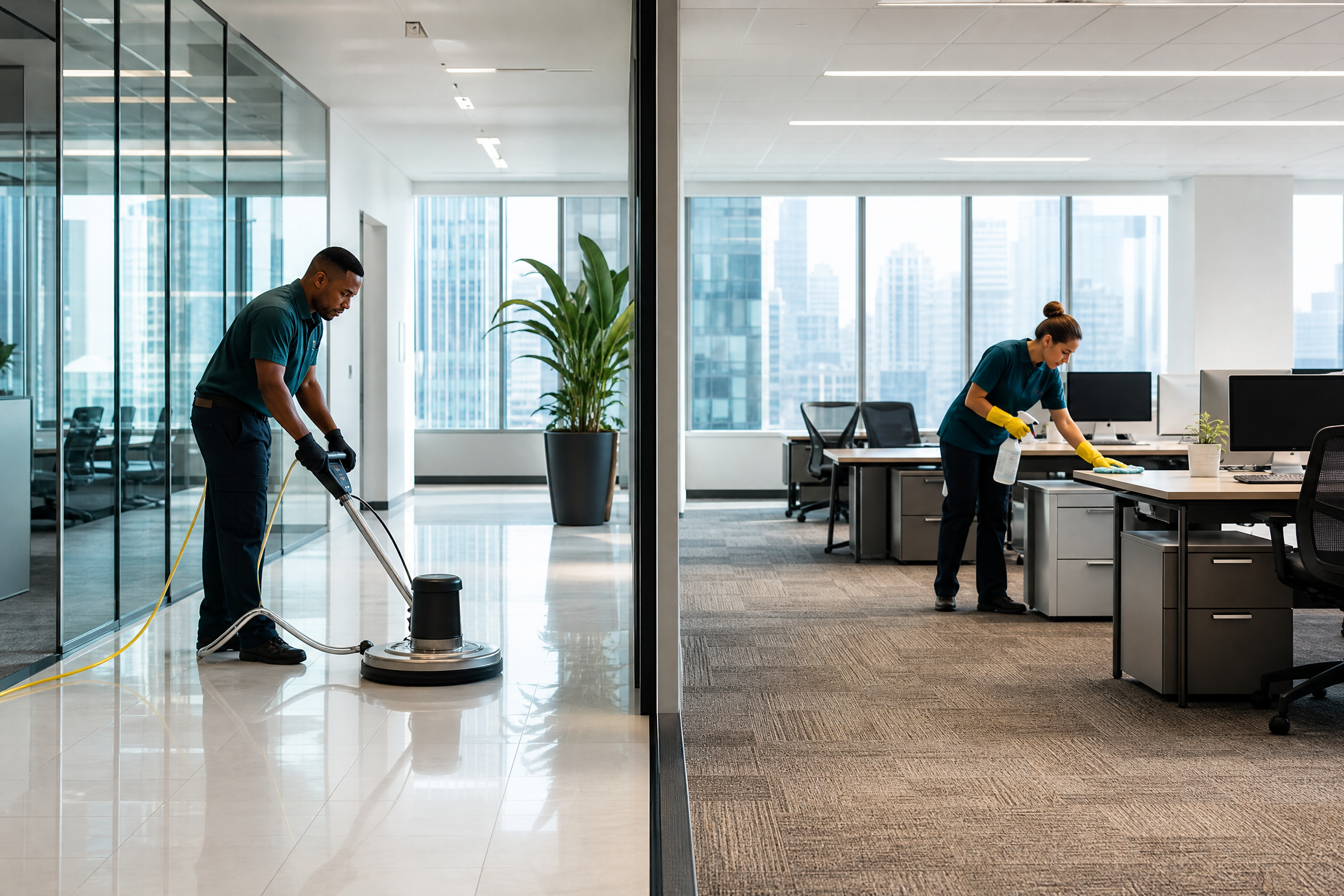
Maintaining a clean environment is essential for any business. Whether you’re managing an office, retail space, or restaurant, cleanliness directly impacts employee productivity, customer satisfaction, and overall brand image. However, not all cleaning services are created equal. Businesses often have to decide between regular cleaning and deep cleaning. While both are important, understanding the differences can help you determine which service is right for your business at any given time.
What is Regular Cleaning?
Regular cleaning refers to routine tasks performed daily or weekly to maintain a tidy and organized space. These tasks are designed to address surface-level cleanliness and ensure your workspace looks presentable.
Common Regular Cleaning Tasks
- Sweeping and mopping floors
- Dusting desks, shelves, and other surfaces
- Emptying trash bins
- Cleaning restrooms (e.g., wiping sinks, restocking supplies)
- Spot-cleaning windows and mirrors
- Vacuuming carpets and rugs
Regular cleaning is ideal for maintaining a professional appearance and a healthy environment. It’s a cost-effective way to manage daily dirt and debris, especially in high-traffic areas. However, it doesn’t address deep-seated grime in hidden areas that can accumulate over time.
What is Deep Cleaning?
Deep cleaning goes beyond the surface to tackle dirt, bacteria, and buildup that regular cleaning might miss. This is a more intensive and time-consuming process that involves cleaning areas that are less frequently addressed in routine maintenance.
Common Deep Cleaning Tasks
- Cleaning behind and under furniture
- Sanitizing and disinfecting surfaces, including high-touch areas like doorknobs and light switches
- Deep-cleaning carpets, including stain removal and shampooing
- Scrubbing grout and tiles in restrooms and kitchens
- Cleaning air vents and HVAC systems
- Polishing fixtures and cleaning baseboards
Deep cleaning is typically done less frequently—every few months or as needed. It’s especially beneficial for preparing a space for new tenants, addressing health concerns, or resetting after a busy season.
- Frequency Regular cleaning is performed daily or weekly. Deep cleaning is done periodically, often quarterly or semi-annually.
- Regular cleaning is performed daily or weekly.
- Deep cleaning is done periodically, often quarterly or semi-annually.
- Scope Regular cleaning focuses on maintaining cleanliness in visible and high-traffic areas. Deep cleaning addresses overlooked and hard-to-reach spaces.
- Regular cleaning focuses on maintaining cleanliness in visible and high-traffic areas.
- Deep cleaning addresses overlooked and hard-to-reach spaces.
- Purpose Regular cleaning maintains daily tidiness. Deep cleaning restores spaces to like-new conditions and targets accumulated grime.
- Regular cleaning maintains daily tidiness.
- Deep cleaning restores spaces to like-new conditions and targets accumulated grime.
Regular cleaning is suitable for businesses looking to maintain a consistently clean and welcoming environment. Consider regular cleaning if:
- Your business receives daily foot traffic.
- You want to project a polished and professional image.
- Employees and customers frequently use shared spaces like kitchens, break rooms, or restrooms.
Industries such as retail, corporate offices, and healthcare facilities often benefit from regular cleaning to uphold standards and meet client expectations.
Deep cleaning is ideal when routine cleaning isn’t enough to address specific issues. Consider deep cleaning if:
- You’re preparing for an important inspection or event.
- It’s been months since your space was thoroughly cleaned.
- Employees or customers are experiencing allergy symptoms or noticing odors.
- Seasonal changes bring about extra dirt and debris (e.g., mud in winter, and pollen in spring).
Restaurants, warehouses, and businesses undergoing renovations often require deep cleaning to ensure safety and compliance.
Rather than choosing one over the other, businesses should incorporate both regular and deep cleaning into their maintenance plan. Regular cleaning ensures your workspace stays presentable and functional daily, while deep cleaning provides a reset to maintain long-term cleanliness and hygiene.
By alternating between these two services, businesses can create a cleaner, healthier, and more appealing environment for employees and customers alike.
When deciding between regular and deep cleaning, assess the needs of your business:
- Evaluate the level of cleanliness and identify problem areas.
- Consider the nature of your business and industry regulations.
- Consult with a professional cleaning service for tailored recommendations.
Investing in the right cleaning services can enhance workplace productivity, improve employee morale, and leave a lasting impression on clients and visitors.
In conclusion, both regular cleaning and deep cleaning play critical roles in maintaining a spotless and sanitary workspace. Regular cleaning keeps your business running smoothly on a daily basis, while deep cleaning addresses the deeper layers of dirt and grime that accumulate over time. By combining these services, you ensure that your business remains not just clean, but truly immaculate.